




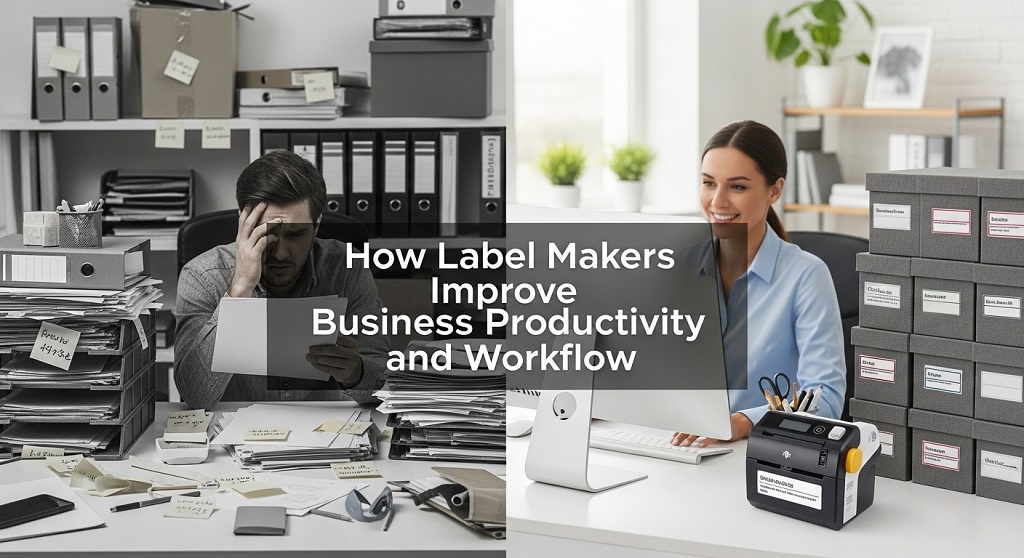
How Label Makers Improve Business Productivity and Workflow
Label makers improve business productivity by organizing assets, reducing errors, speeding workflows, and improving communication across teams.
In many workplaces, time is lost not because tasks are difficult, but because systems are unclear. Files go missing. Inventory is mislabeled. Equipment is shared without tracking. Employees ask the same questions repeatedly. These small issues create real delays.
This is where label makers become practical tools rather than office accessories. Businesses use label makers to identify inventory, track equipment, streamline storage systems, and standardize documentation processes. The result is faster task completion and fewer mistakes.
A workplace labeling system creates structure. Employees know where items belong. Teams reduce confusion. Managers spend less time resolving preventable errors. Over time, these improvements compound into measurable efficiency gains.
According to operations workflow studies referenced by logistics and supply chain analysts, structured labeling systems can reduce item retrieval time by up to 25% in warehouse-style environments. Even small offices benefit from clearer file organization and asset tracking.
In short, label makers support consistency. And consistency improves workflow.
Why Do Businesses Use Label Makers for Daily Operations?
Businesses use label makers to standardize processes, reduce manual errors, and improve coordination between departments.
Many organizations struggle with repeated operational friction. Employees store items differently. Files follow inconsistent naming formats. Inventory locations change without notice. These issues slow work.
Label makers solve this by creating visual clarity.
When storage shelves, folders, cables, shipping materials, and equipment carry consistent labels, employees spend less time searching and more time completing tasks.
For example, a mid-sized retail stockroom documented in a workplace efficiency audit reduced restocking time by nearly 18% after implementing shelf labeling and barcode identification. The change required minimal investment but delivered measurable improvements within weeks.
- Faster item retrieval
- Improved workflow consistency
- Reduced training time for new staff
- Better inventory tracking accuracy
- Clearer responsibility assignment
These improvements explain why labeling systems are standard across logistics, healthcare, education, retail, and manufacturing environments.
How Do Label Makers Reduce Workplace Errors?
Label makers reduce workplace errors by providing clear visual identification that prevents confusion during storage, handling, and documentation tasks.
Errors often happen when employees rely on memory instead of systems. Misplaced tools. Incorrect files. Wrong inventory bins. Each mistake costs time.
Label makers create a reference system that replaces guesswork.
In healthcare environments, for example, standardized labeling protocols support patient safety and inventory tracking. Studies referenced in hospital workflow optimization reports show that clear labeling contributes to measurable reductions in medication handling errors.
In office environments, labeling helps prevent:
- Misfiled paperwork
- Incorrect shipment packaging
- Lost shared equipment
- Duplicate purchases
- Cable misidentification
When employees trust the labeling system, they move faster and make fewer decisions under uncertainty.
How Do Label Makers Improve Inventory Management Efficiency?
Label makers improve inventory management by making stock locations visible, searchable, and trackable in real time.
Inventory confusion slows operations more than most businesses expect. Even small storage rooms become inefficient without clear identifiers.
Label makers create structure across shelves, containers, and tracking systems.
A logistics case study published in warehouse optimization research showed that barcode labeling combined with printed shelf identifiers reduced picking errors by nearly 30% during the first implementation phase.
Clear inventory labeling supports:
- Faster stock checks
- Accurate reorder tracking
- Reduced shrinkage risk
- Improved warehouse navigation
- Better audit readiness
These benefits make labeling systems essential for businesses managing physical goods.
Can Label Makers Improve Employee Productivity?
Yes. Label makers improve employee productivity by reducing search time and simplifying routine decisions.
Employees lose minutes throughout the day locating shared materials. Over weeks, this becomes hours.
Label makers remove that friction.
When tools, files, and storage zones follow a predictable labeling structure, employees spend less time asking questions and more time completing assignments.
According to workplace organization studies referenced in administrative workflow reports, structured labeling systems can reduce document retrieval time by up to 20% in office environments.
Productivity improves because employees:
- Locate resources faster
- Avoid repeated clarification requests
- Follow consistent procedures
- Share equipment efficiently
- Reduce duplication of effort
How Do Label Makers Support Workflow Standardization Across Departments?
Label makers support workflow standardization by ensuring every department follows the same identification and storage conventions.
Without standardized systems, each team develops its own structure. This creates communication gaps between departments.
Label makers solve this by introducing shared visual language.
For example:
- Finance teams label archive files consistently
- IT departments label hardware assets
- Operations teams label storage zones
- Shipping teams label packaging workflows
When departments align labeling formats, collaboration improves.
Standardization also reduces onboarding time for new employees because they learn one system instead of several.
Do Label Makers Help Improve Workplace Safety?
Yes. Label makers improve workplace safety by identifying hazards, equipment zones, and compliance instructions clearly.
Safety communication depends on visibility. Employees must recognize risks immediately.
Label makers help businesses identify:
- Electrical panels
- Emergency exits
- Chemical storage containers
- Protective equipment locations
- Restricted access zones
Safety labeling reduces accidents caused by uncertainty. It also supports regulatory compliance in industries where documentation standards are required.
Facilities using structured safety labeling systems report improved inspection readiness and fewer procedural violations during audits.
How Do Label Makers Improve Asset Tracking and Equipment Management?
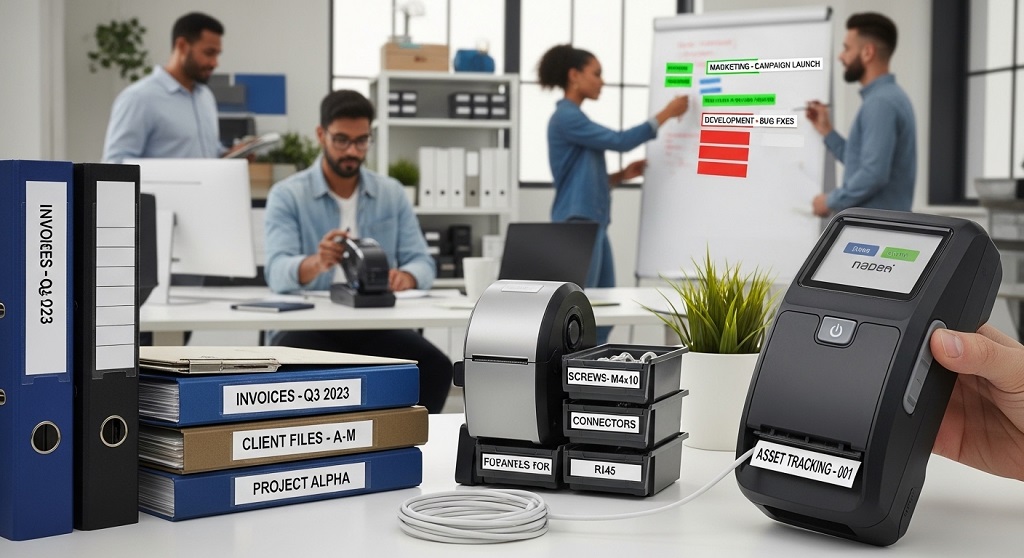
Label makers improve asset tracking by assigning visible identifiers to shared tools, devices, and infrastructure resources.
Shared equipment often disappears temporarily rather than permanently. Still, the delay affects productivity.
Asset labels solve this problem.
Businesses use labeling systems to track:
- Laptops
- Printers
- Testing devices
- Warehouse tools
- Maintenance equipment
Asset identification reduces replacement costs and prevents duplicate purchases.
In one internal operations report from a regional maintenance company, labeling mobile equipment reduced replacement orders by over 12% within six months.
Are Label Makers Cost-Effective for Small Businesses?
Yes. Label makers offer small businesses a low-cost way to improve organization without investing in complex software systems.
Small businesses often operate with limited staff. That means every efficiency improvement matters.
Label makers provide immediate benefits without training requirements.
| Business Area | Impact of Label Makers |
|---|---|
| Inventory | Faster stock visibility |
| Documents | Improved file access speed |
| Shipping | Reduced packing errors |
| Storage | Better space utilization |
| Equipment | Clear ownership tracking |
Because label makers require minimal setup, businesses see workflow improvements quickly.
How Do Label Makers Support Digital Transformation Strategies?
Label makers support digital transformation by linking physical assets with digital tracking systems through barcode and QR labeling.
Many companies digitize records but overlook physical workflow structure.
Label makers bridge that gap.
When businesses connect printed identifiers with inventory software, they create hybrid tracking systems that improve visibility across operations.
Examples include:
- QR-based asset tracking
- Barcode inventory scanning
- Warehouse automation support
- Maintenance scheduling integration
- Document archive referencing
This combination strengthens operational transparency.
What Are the Long-Term Benefits of Label Makers in Business Productivity?
The long-term benefits of label makers in business include faster workflows, reduced operational errors, improved safety compliance, and better resource management.
Businesses rarely notice workflow friction until it accumulates.
Label makers address small inefficiencies before they become operational problems.
Over time, structured labeling systems contribute to:
- Lower operational delays
- Improved audit readiness
- Reduced equipment loss
- Faster onboarding processes
- Higher team coordination efficiency
These gains explain why labeling systems remain standard tools across industries.
Conclusion: Why Should Businesses Invest in Label Makers Today?
Businesses should invest in label makers because they create immediate workflow clarity and long-term operational consistency.
Many productivity problems do not require complex solutions. They require structure.
Label makers provide that structure.
They reduce search time. Prevent avoidable errors. Improve communication across departments. Support inventory tracking. Strengthen safety compliance. And simplify onboarding processes.
These improvements scale with business growth.
If your organization handles documents, inventory, equipment, or shared workspaces, implementing a labeling system is one of the fastest ways to improve workflow reliability.
Start building a structured labeling strategy today and turn everyday tasks into predictable, efficient processes.
Frequently Asked Questions About the Benefits of Label Makers in Business
Do label makers really improve business productivity?
Yes. Label makers improve productivity by reducing search time, preventing errors, and standardizing workflows across departments. Structured labeling systems support faster task completion.
Are label makers useful for small offices?
Small offices benefit significantly because labeling improves file organization, equipment tracking, and storage clarity without requiring complex software tools.
Can label makers help reduce inventory mistakes?
Yes. Clear shelf identifiers and barcode labels reduce picking errors and improve stock accuracy in both retail and warehouse environments.
Do label makers support workplace safety compliance?
Safety labels help identify hazard zones, emergency exits, and restricted areas. This improves compliance readiness and reduces risk exposure.
Are label makers expensive to implement in businesses?
No. Most label maker systems require minimal setup investment and deliver immediate workflow improvements, making them cost-effective productivity tools.
Can label makers integrate with digital inventory systems?
Yes. Many businesses connect barcode and QR labels with inventory management software to create hybrid tracking systems.
How quickly can businesses see results after using label makers?
Most organizations notice improvements within weeks, especially in storage efficiency, document retrieval speed, and equipment tracking accuracy.
Read More Also: Travel Tote Bag vs Backpack: Which Is Better for Women Travelers?
Learn More: How to Select Lightweight Golf Bags for Easy Carrying
