




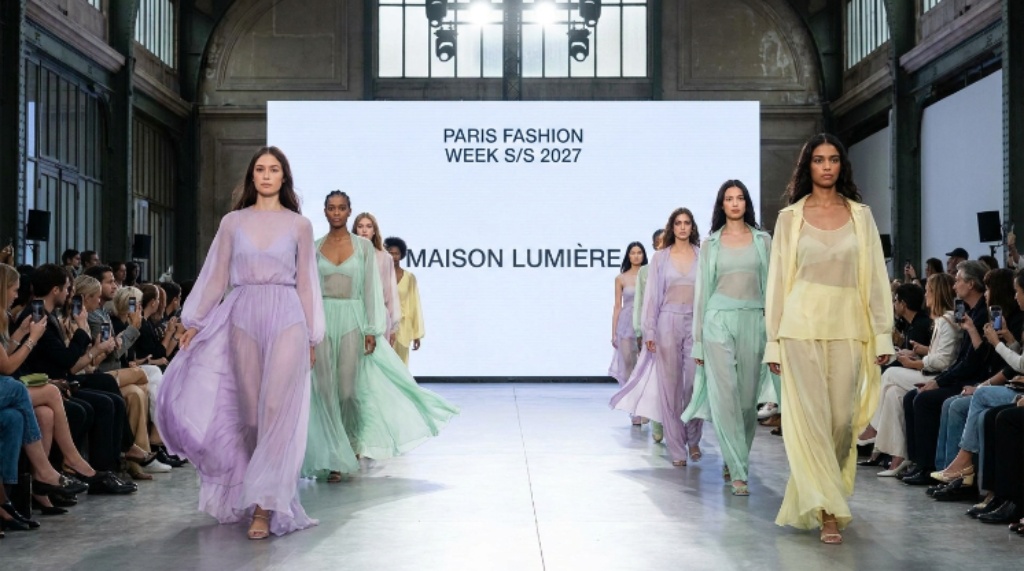
Paris Fashion Week Womenswear Spring/Summer 2027: Full Highlights and Trends
Every autumn, the world’s attention turns to one city. Paris closes out global fashion month in the most spectacular way possible. The Spring/Summer 2027 womenswear shows ran from September 28 to October 6, 2026, drawing buyers, editors, celebrities, and style lovers from every corner of the globe. Nine days. Dozens of shows. One unforgettable season.
This edition was notable for its creative energy. New creative directors were still finding their voices. Established houses pushed further into bold territory. And the clothes themselves told a clear story: lightness, craft, and a renewed joy in dressing.
The Season in Context
Paris is the final stop on the fashion month circuit. New York opens the season in mid-September. London and Milan follow. However, Paris is where the most anticipated collections land. It carries centuries of couture tradition and is home to the most powerful houses in the world.
The SS27 season arrived with particular weight. Several major creative directors were presenting their sophomore womenswear collections. Matthieu Blazy at Chanel and Jonathan Anderson at Dior had both made strong debuts the season before. Therefore, expectations were exceptionally high. The fashion press was watching closely to see whether those first statements would evolve into coherent long-term visions.
They did. And then some.
Chanel: Modernity Rooted in Heritage
Matthieu Blazy’s second womenswear collection for Chanel was one of the most discussed shows of the week. The Grand Palais provided its signature monumental backdrop. Blazy continued his conversation with the house’s founder, drawing on Gabrielle Chanel’s ideas of freedom and practicality.
The silhouettes were fluid. Shoulders were soft. Tweed appeared in unexpected forms — lighter, more transparent, woven with threads that caught the spring light. The house’s classic codes were all present, but they felt reborn rather than repeated. Accessories leaned into ease, with flat shoes and unfussy bags completing looks that were elegant without being stiff.
Additionally, the closing sequence elevated the whole. Chainmail fabrics and jewel-adorned pieces gave the finale a sense of ceremony. Critics responded warmly. It was a collection that respected the past while pointing firmly toward the future.
Dior: Garden, Fantasy, and the Female Gaze
Jonathan Anderson’s vision for Dior grows richer with each season. For SS27, the setting was lush and dreamlike — a garden environment that perfectly matched the clothes. Anderson has made femininity his central subject at Dior, but it is femininity on deeply personal terms.
The Bar jacket, one of the house’s most iconic garments, was reworked in several imaginative ways. Shrunken versions appeared in scalloped tulle. Longer variations played with proportion and lightness. Throughout, there was a sense of a woman dressing entirely for herself — not for spectacle, but for pleasure.
Floral references ran through the collection without becoming literal or obvious. A weighted hemline echoed the shape of a trumpet flower. Shoes featured delicate botanical embellishments. The result was fashion that rewarded careful attention, with layers of reference that revealed themselves gradually.
Louis Vuitton: Spectacle with Substance
Nicolas Ghesquière at Louis Vuitton has always been drawn to the intersection of history and the future. For SS27, he explored intimacy and the freedom of private dressing. The collection drew on the aesthetics of indoor garments — robes, slips, soft trousers — reimagined through his signature technical precision.
The venue added another dimension. Ghesquière’s choice of location reflected his broader theme. Opulent surroundings paired with clothes that felt personal and unguarded created a productive tension. It was dressing as refuge rather than performance.
However, this was no quiet collection. Closing looks pushed into sculptural territory, with strong shoulders and spatial silhouettes that read more like wearable art than ready-to-wear. Vuitton’s ability to balance wearability with avant-garde ambition remains one of the most impressive feats in contemporary fashion.
Saint Laurent, Hermès, and the Power of Restraint
Not every great collection relies on drama. Saint Laurent and Hermès both demonstrated this with quiet authority.
Saint Laurent delivered its signature streamlined sensuality. Sharp tailoring, clean proportions, and an unmistakable ease defined the collection. There were no unnecessary details. Every piece felt considered and resolved. It was fashion in its most disciplined form.
Hermès, as ever, rooted its collection in craft. Artistic director Nadège Vanhée-Cybulski built her SS27 collection around the idea of concealment and revelation. Zips became the central design motif — functional, graphic, and surprisingly expressive. The materials were extraordinary. The construction was impeccable. Hermès does not chase trends, and this season proved once again why that approach commands such respect.
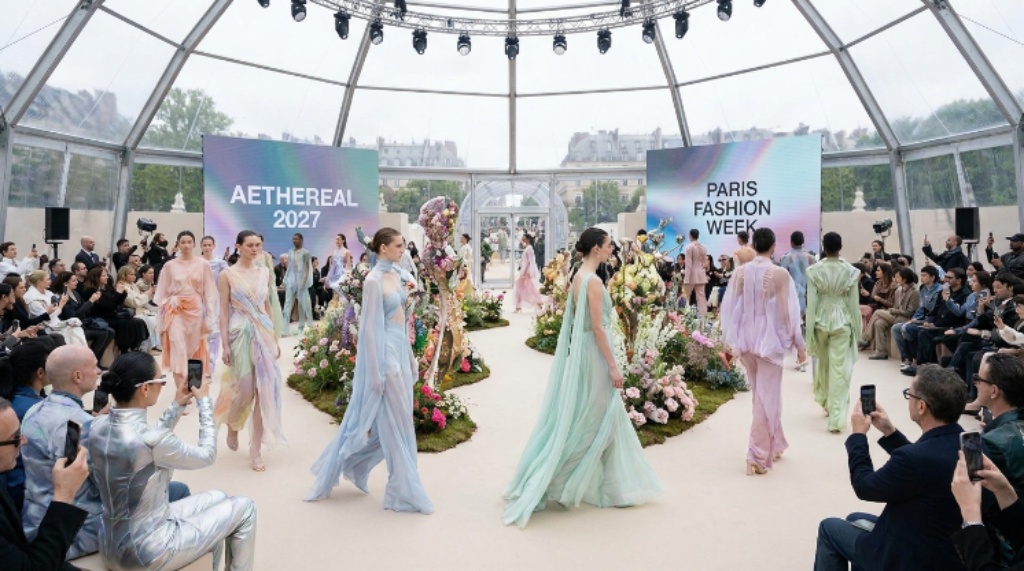
Key Trends from the Spring/Summer 2027 Runways
The Paris Fashion Week SS27 season produced several defining trends that will shape what appears in stores throughout 2027.
Fluid tailoring was everywhere. Sharp structures gave way to softer, more relaxed constructions. Blazers draped rather than structured. Trousers moved with the body rather than against it. The overall effect was one of ease without carelessness.
Transparency played a major role. Sheer fabrics, open weaves, and layered light textiles gave collections an airy quality that felt appropriate for spring. Houses used transparency to add depth and complexity without adding weight.
Craft and artisanal detail returned with renewed force. Embroidery, hand-stitching, and intricate surface work appeared across the schedule. In a season where many collections engaged with the theme of slowness and intention, these details communicated that fashion still values the handmade.
Color told a gentle story. Pale neutrals dominated. Soft whites, warm creams, and dusty mauves created an overall palette of quiet confidence. Against this calm base, occasional bursts of saturated color — a deep red, a vivid emerald — stood out all the more powerfully.
Finally, the relationship between clothes and the body shifted subtly. Silhouettes were generally longer and more fluid. Hemlines dropped. Volume appeared at the hem rather than the shoulder. It was a graceful, considered evolution rather than a dramatic revolution.
Emerging Voices and the Sphere Programme
Paris Fashion Week is not only about established houses. The Sphere programme, operated by the Fédération de la Haute Couture et de la Mode, gives emerging designers a platform alongside the industry’s biggest names. This season’s selection brought fresh perspectives to the schedule.
Several younger labels explored sustainability as a creative starting point rather than a marketing position. Regenerative fibers and recycled textiles appeared not as gestures but as genuine design choices that shaped the silhouettes and textures of the collections. Additionally, new voices from Belgium continued to make a strong impression. The tradition of rigorous, intellectually engaged design that Belgium has contributed to fashion for decades showed no signs of slowing.
The Venues: Paris as a Stage
One thing that sets Paris apart is how its physical spaces become part of the fashion story. The Grand Palais, the Musée Rodin gardens, the Palais de Tokyo, and the Palais Royal all hosted shows this season. Each location added meaning to the collections presented within it.
Beyond the official calendar, the streets of Paris themselves became a runway. Street style outside the major shows rivaled the presentations inside. The city’s energy during fashion week is genuinely singular. Therefore, for those who could attend in person, even the walks between venues were part of the experience.
Conclusion
The Paris Fashion Week Womenswear Spring/Summer 2027 season confirmed that creativity in fashion is thriving. Matthieu Blazy deepened his conversation with Chanel’s heritage. Jonathan Anderson brought a personal and poetic femininity to Dior. Nicolas Ghesquière balanced intimacy with spectacle at Louis Vuitton. Saint Laurent and Hermès reminded the industry that restraint and craft are never out of fashion.
The season’s key trends — fluid tailoring, transparency, artisanal detail, a gentle color palette, and elongated silhouettes — point toward a spring of quiet confidence and thoughtful dressing. Emerging designers added fresh energy and new ideas to a schedule already rich with established brilliance.
Paris remains the world’s fashion capital for a reason. It is where tradition and innovation are held in constant, productive tension. Spring/Summer 2027 proved that this balance is as vital and exciting as ever.
Frequently Asked Questions
When did Paris Fashion Week Womenswear Spring/Summer 2027 take place?
The womenswear shows for Spring/Summer 2027 ran from September 28 to October 6, 2026. This nine-day schedule marked the final stop of the global fashion month circuit, following New York, London, and Milan.
Which designers were most talked about during the SS27 season?
Matthieu Blazy at Chanel, Jonathan Anderson at Dior, and Nicolas Ghesquière at Louis Vuitton generated the most critical discussion. Saint Laurent and Hermès also received strong praise for their disciplined, craft-focused collections.
What were the biggest womenswear trends for Spring/Summer 2027?
The dominant trends included fluid tailoring, sheer and transparent fabrics, artisanal embroidery and surface detail, a soft neutral color palette, and longer and more fluid silhouettes overall.
Can the public attend Paris Fashion Week shows?
Most runway shows are invitation-only and open to press, buyers, and invited guests only. However, public presentations, exhibitions, and street style areas around major venues are accessible to everyone. Checking the FHCM official calendar at fhcm.paris is always advisable for the latest information.
How do the Paris runway shows affect what appears in stores?
Collections shown at Paris Fashion Week in late September are presented to press and buyers for the following spring season. Retailers then place orders between February and April, and the collections arrive in stores in early spring of the following year.
Discover the Location on Google Maps:
